

Cash back credit card
Big Rewards. Low Rates.
Earn cash back on gas, groceries, errands, and everyday spending with a card that keeps things refreshingly simple.
- 2% Cash Back on Gas
- 1% Cash Back on Everything Else
- No Annual Fee
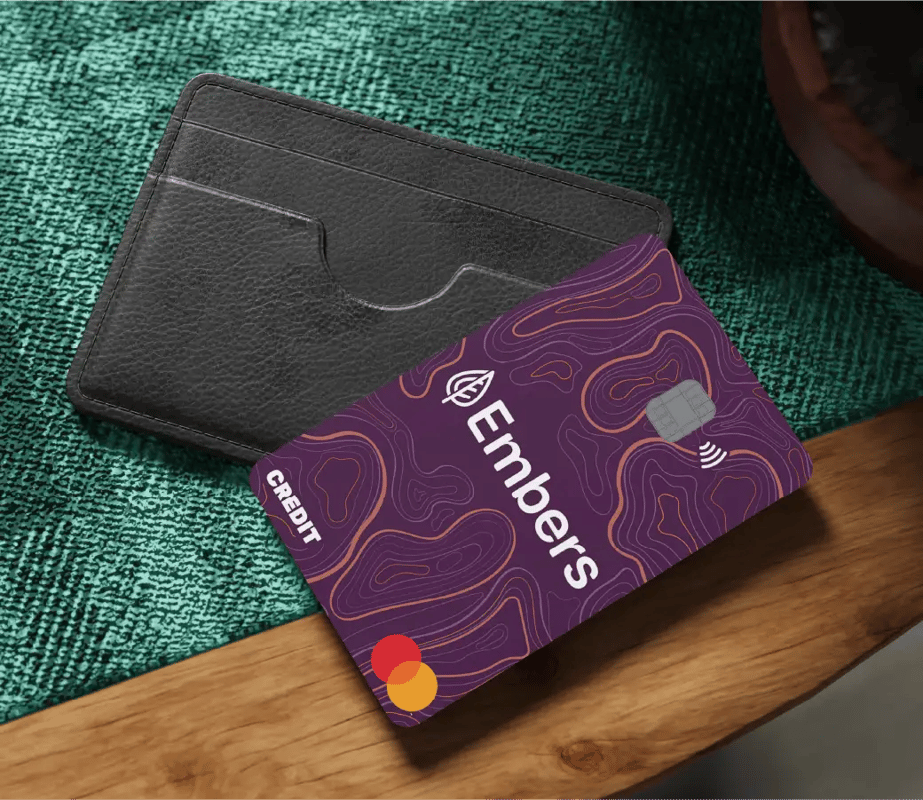
Credit Card Rewards
Earn cash back on the purchases you’re already making, from gas and road trips to dinner, shopping, travel, and everything else life throws in the cart. Rewards are deposited directly into your Embers account quarterly.

Road trip, coffee run, or just cruising with your favorite people - earn 2% cash back every time you fuel the fun.

Dinner with friends, flights out of town, shopping runs, subscriptions, and everyday errands earn 1% cash back on the purchases that keep life moving.

Credit Card Benefits
It may live in your wallet, but it does more than sit there. The Embers Credit Card comes with extra Mastercard benefits that help protect what you buy, where you go, and how you stay connected.
Pay your monthly phone bill with your Embers Credit Card and get coverage for eligible1 stolen or damaged phones.
Rent with your Embers Credit Card and get secondary coverage for eligible2 damage, theft, and towing.
Use your Embers Credit Card and get extra protection if eligible3 purchases are damaged or stolen.
Book eligible4 travel with your Embers Credit Card and get coverage if a covered loss forces you to cancel.
Credit card interest rate comparison
Low Rates for Real-Life Spending
When comparing credit cards, look beyond the rewards headline. APR, fees, cash back rules, and support all matter. The Embers Credit Card keeps things simple with cash back on everyday purchases, no annual fee, local credit union support, and rates starting at just 11.15% APR.‡
See how that stacks up against other credit card starting rates:
- Capital One QuickSilver: 18.49%5
- Discover it Card: 17.49%6
- AMEX Cards: 19.49%7
- Venmo: 18.74%8
- Apple Card: 17.49%9
Credit Card FAQs
Credit Card Questions, Answered:
Choosing a credit card should feel clear, not complicated. Get straightforward answers about APR, rewards, credit scores, cash back, local card access, and how to choose a card that actually fits your life.
What should I consider before choosing a credit card?
Before choosing a credit card, think about how you plan to use it. The right card should fit your spending habits, your budget, and how you handle payments, not just the biggest rewards headline.
A few things to compare:
APR and interest costs.
If you may carry a balance, the card’s APR matters. A lower-rate credit card can help reduce interest costs compared to cards with higher ongoing rates.
Annual fees.
Some credit cards charge an annual fee in exchange for extra perks. Before choosing one, make sure the benefits are worth more than the fee you’ll pay.
Rewards that match real life.
Look for rewards that fit how you actually spend. Cash back on everyday purchases, gas, restaurants, shopping, and travel can be more useful than complicated points programs you rarely use.
Fees, rules, and fine print.
Check for late fees, balance transfer fees, foreign transaction fees, penalty rates, and how rewards are earned or redeemed. A card that looks great upfront may be less helpful if the rules are hard to use.
Credit score and approval requirements.
Your credit score can affect whether you qualify for a credit card and what rate you may receive. In general:
- Excellent credit may qualify for stronger rates, rewards, and premium card options.
- Good credit may qualify for many standard cash back or rewards cards.
- Fair credit may qualify for more basic card options with fewer perks.
- Limited or poor credit may require a secured card or credit-building option.
Support when you need help.
A credit card is not just a piece of plastic. It helps to know who you can contact if you have a question, spot suspicious activity, or need help understanding your account.
At Embers Credit Union, our credit card keeps things simple with cash back on everyday purchases, low rates, no annual fee, Mastercard benefits, digital wallet access, and local credit union support from a team that actually knows the communities we serve.
Where can I get a credit card near me?
You can get a credit card near you through local financial institutions like banks and credit unions, as well as online credit card providers. When comparing options, look at the APR, annual fee, rewards, benefits, and the kind of support you’ll receive after the card is opened.
At Embers Credit Union, we offer credit cards for members across Michigan’s Upper Peninsula and surrounding communities, with local branch access in Marquette, Escanaba, Munising, Negaunee, Gwinn, and Wells. Members can also get same-day credit card printing at our Munising, Marquette, and Escanaba branches, making it easier to walk in and leave with a card ready to use.
So if you’re searching for a credit card near you in the Upper Peninsula, Embers gives you a local option with cash back rewards, competitive rates, no annual fee, Mastercard benefits, digital wallet access, and in-person support close to home.
How to get a credit card:
To get a credit card, start by choosing a card that fits your spending habits, credit profile, and financial goals. You’ll usually need to be at least 18 years old to apply, and the card issuer will review your identity, income, credit history, and overall ability to repay before making a decision.
Here are the basic steps:
Check your credit.
Before applying, it helps to know where your credit stands. Your credit history can affect whether you’re approved and what APR you may qualify for.
Compare card options.
Look at the APR, annual fee, rewards, benefits, credit limit, and support. If you plan to carry a balance, a lower-rate card may matter more than a flashy rewards program.
Gather your information.
Most credit card applications ask for your legal name, date of birth, Social Security number or taxpayer identification number, address, income, employment information, and housing details.
Apply online or in person.
Many credit card applications can be completed online, but you can also stop by one of our Embers Credit Union locations if you’d rather talk with someone before applying.
Wait for a decision.
Some applications are approved quickly, while others may need additional review. If approved, you’ll receive your card and account details. If denied, you should receive information explaining why.
At Embers Credit Union, members can apply for an Embers Credit Card online or stop by one of our local branches for help. Our credit card offers cash back on everyday purchases, low rates, no annual fee, Mastercard benefits, digital wallet access, and local support when you need it.
How many credit cards should I have?
There is not one "perfect" number of credit cards for everyone, but many people do well with 1 to 3 credit cards. The right number depends on how comfortable you are managing payments, balances, due dates, rewards, and available credit.
A good way to think about it:
One credit card can be a smart fit if you want to keep things simple. You only have one balance to track, one due date to remember, and one account to manage. The downside is that you may not have a backup if the card is lost, compromised, temporarily declined, or not accepted somewhere.
Two to three credit cards can make sense for people who want a primary card, a backup card, and maybe a second rewards option. This setup can give you more flexibility while still keeping things manageable. For example, one card might be used for everyday purchases while another is kept for travel, emergencies, or specific rewards categories.
Four or more credit cards can work for people who are very organized and want to maximize rewards, credit limits, or sign-up offers. But more cards also mean more due dates, more terms to track, more opportunities to overspend, and a higher risk of missing a payment. If you do not enjoy managing details, this can become more trouble than it is worth.
Your credit score does not depend on having a specific number of cards. It depends more on how you manage them. Key factors include:
Payment history.
Paying on time matters more than the number of cards you have. A missed payment can hurt your credit, especially if it becomes 30 days late or more.
Credit utilization.
This is how much of your available credit you are using. For example, if you have $10,000 in total credit limits and carry $2,000 in balances, your utilization is 20%. Lower utilization is generally better, and many people try to stay below 30%.
Length of credit history.
Older accounts can help your credit profile. Opening several new cards at once can lower the average age of your accounts and may temporarily affect your score.
Hard inquiries and new accounts.
Each credit card application may create a hard inquiry. Too many applications in a short time can make you look riskier to lenders.
Fees and card value.
If a card has an annual fee, make sure the rewards or benefits are worth it. A simple no-annual-fee card may be a better fit if you want everyday value without extra cost.
A practical rule: have only as many credit cards as you can manage confidently. If you can pay on time, keep balances low, avoid unnecessary fees, and understand how each card fits your life, more than one card can be useful. If managing multiple cards feels like a chore, one strong everyday card may be the better move.
At Embers Credit Union, our credit card is built to be a simple, everyday option with cash back rewards, low rates, no annual fee, Mastercard benefits, and local support when you need help.
What is APR on a credit card - What's a good APR?
APR stands for Annual Percentage Rate. On a credit card, APR is the yearly interest rate you may be charged if you carry a balance from one billing cycle to the next. In plain terms, it helps show how much borrowing on the card could cost if you do not pay your full statement balance each month.
A good APR on a credit card depends on the market, the card type, and your credit profile, but in general, anything below the national credit card average is worth a closer look. Recent Federal Reserve data shows average credit card rates are around the low 20% range, so a card with an APR under 20% may be considered competitive in today’s market.
That said, don’t take the lowest advertised rate as a guarantee. Credit card rate ranges usually start with the best available APR for borrowers with the strongest credit profiles. If a card says it starts at a certain APR, that starting rate is generally for highly qualified applicants. Your actual APR may be higher based on your credit score, credit history, income, debt, and overall application.
At Embers Credit Union, the Embers Credit Card starts at 12.40% APR‡, which is well below many national credit card averages. But your final rate still depends on credit approval and your individual credit profile. That’s why it’s smart to compare more than rewards alone. Look at the APR, annual fee, cash back structure, benefits, and the support you’ll get if you ever have a question or issue.
One more thing: if you pay your full statement balance every month, you can usually avoid paying interest on purchases altogether. But if there’s a chance you’ll carry a balance, choosing a lower-rate credit card can matter a lot.
Will applying for a credit card affect my credit score?
Yes, applying for a credit card can affect your credit score, but usually only slightly and temporarily. When you officially submit a credit card application, the lender typically performs a hard inquiry, also called a hard pull, to review your credit history.
A single hard inquiry may cause a small dip in your score, often only a few points. The inquiry can stay on your credit report for up to two years, but its impact on your score usually fades over time, especially if you continue making payments on time and managing credit responsibly.
It also helps to know the difference between a hard pull and a soft pull:
Hard inquiry: Used when you officially apply for credit, such as a credit card, auto loan, personal loan, or mortgage. This can have a small temporary effect on your credit score.
Soft inquiry: Used when you check your own credit score or when a lender pre-screens or pre-qualifies you. This does not affect your credit score.
If you’re approved for a new credit card, your score may also be affected by the new account itself. Opening a new card can lower the average age of your credit accounts, but it can also increase your total available credit. If your spending stays the same, that higher credit limit may help lower your credit utilization, which can be good for your score over time.
A smart rule: avoid applying for several credit cards in a short period of time, especially if you plan to apply for a mortgage, auto loan, or other major loan soon. But applying for one credit card and using it responsibly is usually not something to panic over.
At Embers Credit Union, we look at your overall credit profile when reviewing a credit card application, including credit history, income, debt, and ability to repay. Our team can also help you understand what to consider before applying, so you can choose a card that fits how you actually plan to use it.
What's the difference between a credit card and a debit card?
The simplest difference is this: a debit card uses money from your checking account, while a credit card lets you borrow money and pay it back later.
When you use a debit card, the money is usually pulled directly from your account. That can help you stick to a budget because you are spending money you already have.
When you use a credit card, the purchase goes against your credit limit. You then repay the credit card balance later. If you pay the full statement balance by the due date, you can usually avoid paying interest on purchases. If you carry a balance, interest may apply based on your card’s APR.
A few key differences:
Debit cards use your own money.
They are tied to your checking account and can be a good fit for everyday spending when you want to avoid borrowing.
Credit cards use borrowed money.
They give you a credit limit and can help cover purchases now, as long as you manage the balance responsibly.
Credit cards can help build credit.
Using a credit card responsibly by paying on time and keeping balances low can help build your credit history. Debit card activity typically does not build credit.
Credit cards may offer more rewards and benefits.
Many credit cards include cash back, travel benefits, purchase protection, or other perks. Debit cards are usually more limited.
Both can offer fraud protection, but they work differently.
With a debit card, fraudulent charges may involve money leaving your account while the issue is reviewed. With a credit card, the charge is tied to your credit line instead of your checking balance, which can make credit cards a stronger option for certain purchases.
At Embers Credit Union, we offer both debit cards and credit cards. Your debit card is a simple way to access money in your checking account, while the Embers Credit Card gives you cash back rewards, low rates, no annual fee, Mastercard benefits, digital wallet access, and local support when you need it.
Is cash back better than points on a credit card?
Cash back is usually better if you want simple, easy-to-use rewards. Instead of tracking point values, travel portals, redemption rules, or rotating categories, cash back gives you a clear reward you can understand right away.
Points can be valuable, especially for people who travel often or enjoy maximizing rewards programs. But they can also be harder to compare because the value of a point may change depending on how you redeem it.
Cash back is more straightforward. If your card earns 1% or 2% cash back, you know what you’re getting. That makes it a strong option for everyday purchases like gas, dining, shopping, travel, and errands.
At Embers Credit Union, our credit card keeps rewards simple with 2% cash back on gas and 1% cash back on everything else. Rewards are deposited directly into your Embers account quarterly, so you get real value without having to chase points, decode reward charts, or play the credit card game.
‡ APR = Annual Percentage Rate
1. Cell Phone Protection: You must charge your monthly eligible cellular wireless telephone bill to your covered card. You are eligible for coverage the first day of the calendar month following the payment of your eligible cellular wireless telephone bill to your covered card. If you pay an eligible cellular wireless telephone bill with your covered card and fail to pay a subsequent bill to your covered card in a particular month, your coverage period changes as follows: 1. Your coverage is suspended beginning the first day of the calendar month following the month of nonpayment to your covered card; and 2. Your coverage resumes on the first day of the calendar month following the date of any future payment of your eligible cellular wireless telephone bill with your covered card.
2. MasterRental: You must initiate and then pay for the entire rental agreement (tax, gasoline, and airport fees are not considered rental charges) with your covered card and/or the accumulated points from your covered card at the time the vehicle is returned. If a rental company promotion/discount of any kind is initially applied toward payment of the rental vehicle, at least one (1) full day of rental must be billed to your covered card. You must decline the optional collision/damage waiver (or similar coverage) offered by the rental company. You must rent the vehicle in your own name and sign the rental agreement. Your rental agreement must be for a rental period of no more than fifteen (15) consecutive days. Rental periods that exceed or are intended to exceed fifteen (15) consecutive days are not covered.
3. Purchase Assurance: You must purchase the new item entirely with your covered card and/or accumulated points from your covered card, for yourself or as a gift.
4. Trip Cancelation: You must charge the full amount of a Covered Trip to your Covered Card or, in combination with your Covered Card, and accumulated points on your Eligible Account or redeemable certificates, vouchers, coupons, or discounts awarded from a frequent flyer program or similar program.
5. Data Pulled on 07/17/26 from: Capital One
6. Data Pulled on 07/17/26 from: Discover
7. Data Pulled on 07/17/26 from: AMEX
8. Data Pulled on 07/17/26 from: Venmo
9. Data Pulled on 07/17/26 from: Apple